The Pyramids of Egypt
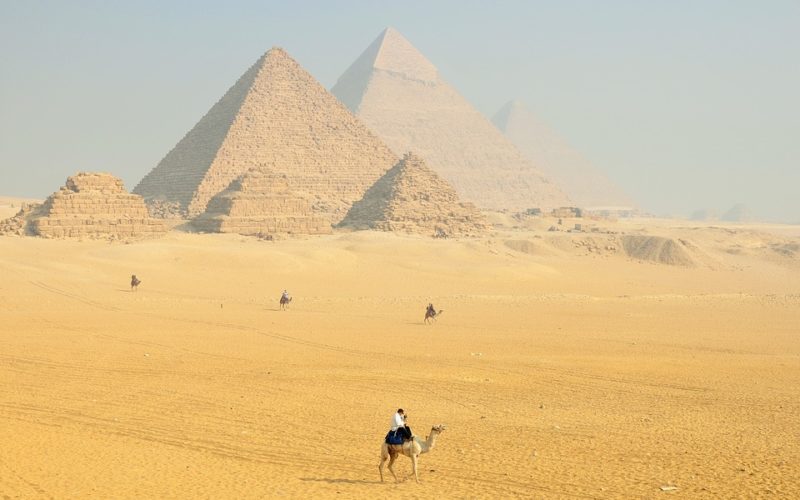
The Pyramids of Egypt are among the most remarkable structures ever built. Rising from the desert sands of Giza, Saqqara, and Dahshur, they have stood for thousands of years as a testament to the ingenuity and ambition of ancient Egyptian civilisation. For many, they remain one of history's greatest mysteries — not just because of their sheer scale, but because of the extraordinary effort it must have taken to build them.
When were the pyramids built?
The earliest Egyptian pyramids date back to around 2,700 BCE, during the Old Kingdom period. The Step Pyramid of Djoser at Saqqara is widely considered the oldest, built under the direction of the architect Imhotep. Over the following centuries, pyramid construction evolved significantly, culminating in the construction of the Great Pyramid of Giza around 2,560 BCE. Built for Pharaoh Khufu, it remained the tallest man-made structure in the world for nearly 3,800 years.
How were they built?
One of the most enduring questions surrounding the pyramids is how the ancient Egyptians managed to construct them with such precision. Archaeological evidence suggests that tens of thousands of skilled workers — not slaves, as was once believed — were employed to quarry, transport, and assemble the enormous limestone and granite blocks used in their construction. Recent discoveries of workers' villages near Giza have shed further light on the organised labour force behind these incredible structures.
What purpose did they serve?
The pyramids were built primarily as royal tombs, designed to house the bodies of pharaohs and their consorts in the afterlife. Ancient Egyptians held a deep belief in life after death, and the pyramid's form was thought to represent the rays of the sun descending to earth — a symbolic stairway for the pharaoh's soul to ascend to the heavens. The internal chambers were filled with treasures, food, and belongings intended to accompany the ruler into eternity.
The Great Pyramid of Giza
Of all the pyramids, none is more celebrated than the Great Pyramid of Giza. Originally standing at 146.5 metres, it was constructed using an estimated 2.3 million stone blocks, each weighing between two and 15 tonnes. It forms part of the Giza pyramid complex, alongside the Pyramid of Khafre and the Pyramid of Menkaure, as well as the iconic Great Sphinx. Together, these structures form one of the most visited archaeological sites in the world and are the only surviving wonder of the ancient world.
What do we still not know?
Despite centuries of study, many questions about the pyramids remain unanswered. Researchers continue to debate the precise construction techniques used, the exact purpose of certain internal chambers, and the astronomical significance of the pyramids' alignment. In recent years, modern scanning technologies have revealed previously unknown voids within the Great Pyramid, suggesting there may still be chambers yet to be discovered. Each new finding raises as many questions as it answers.
Why the pyramids still matter
The Pyramids of Egypt are far more than ancient relics. They offer a window into one of the most sophisticated civilisations the world has ever known — a society capable of extraordinary feats of engineering, organisation, and artistry. Whether studied through the lens of archaeology, architecture, or astronomy, they continue to captivate researchers and visitors alike. As long as they stand, the pyramids will remain one of humanity's most powerful connections to its distant past.